Marine
Refit the interior inside the window you have.
Joinery, bulkheads, cabin ceilings, stair treads and doors refinished aboard — no joinery pulled, no haul-out, no shipping panels to a shop.
What it is
Yacht Interior Refinishing
Refit windows are short and yard time is the most expensive thing on the schedule. Re-veneering an interior means removing joinery, shipping it out, and waiting. Film goes on over the existing veneer in place, so an interior can change completely without the boat leaving its slip.
Send a photo and rough dimensions if you have them — we'll tell you what's possible.
Or text (561) 223-1826
Text us a photo of the interior
Send a photo and rough dimensions if you have them — we'll tell you what's possible.

Scan to text us from your phone
What we resurface
- Bulkheads and wall panels
- Cabin and saloon ceilings
- Stair treads, risers and handrail surrounds
- Cabinetry, lockers and joinery doors
- Galley surfaces and counters
- Helm and console surrounds
Why it works here
Done aboard, in the slip
The work happens on the boat. Nothing is removed and shipped, which is what usually drives both the cost and the calendar on an interior refit.
Light to dark, or dark to light
The most common marine request is taking a dated light oak interior to a contemporary grey or walnut. Film does that without touching the structure underneath.
Ask about marine fire standards early
Commercial and classed vessels may require materials tested to IMO FTP Code standards. Tell us the requirement before selection and we'll confirm what the specific product carries in writing.
Our work
40' motor yacht
Stairwell, wall panels and cabin ceilings taken from the original light oak to an Altyno grey oak woodgrain, done aboard with no joinery removed.
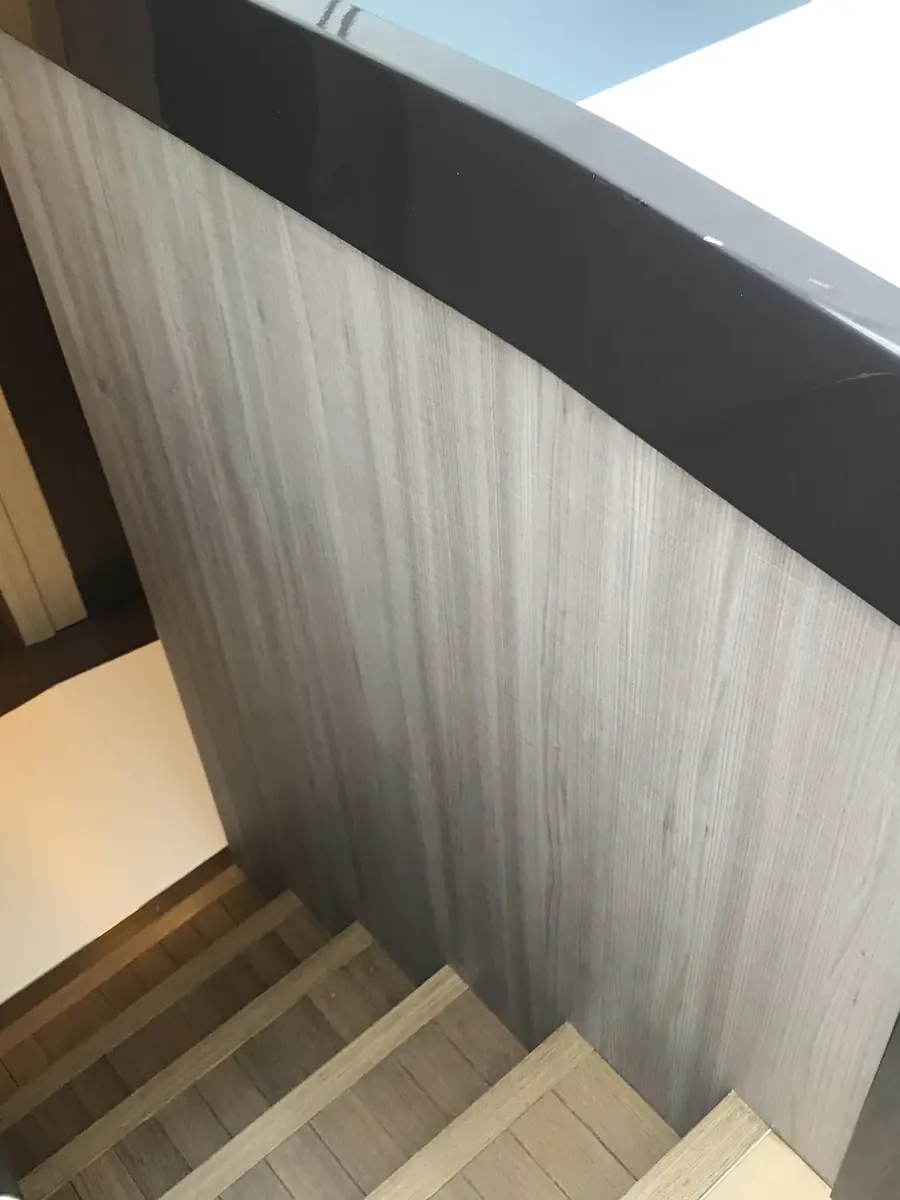
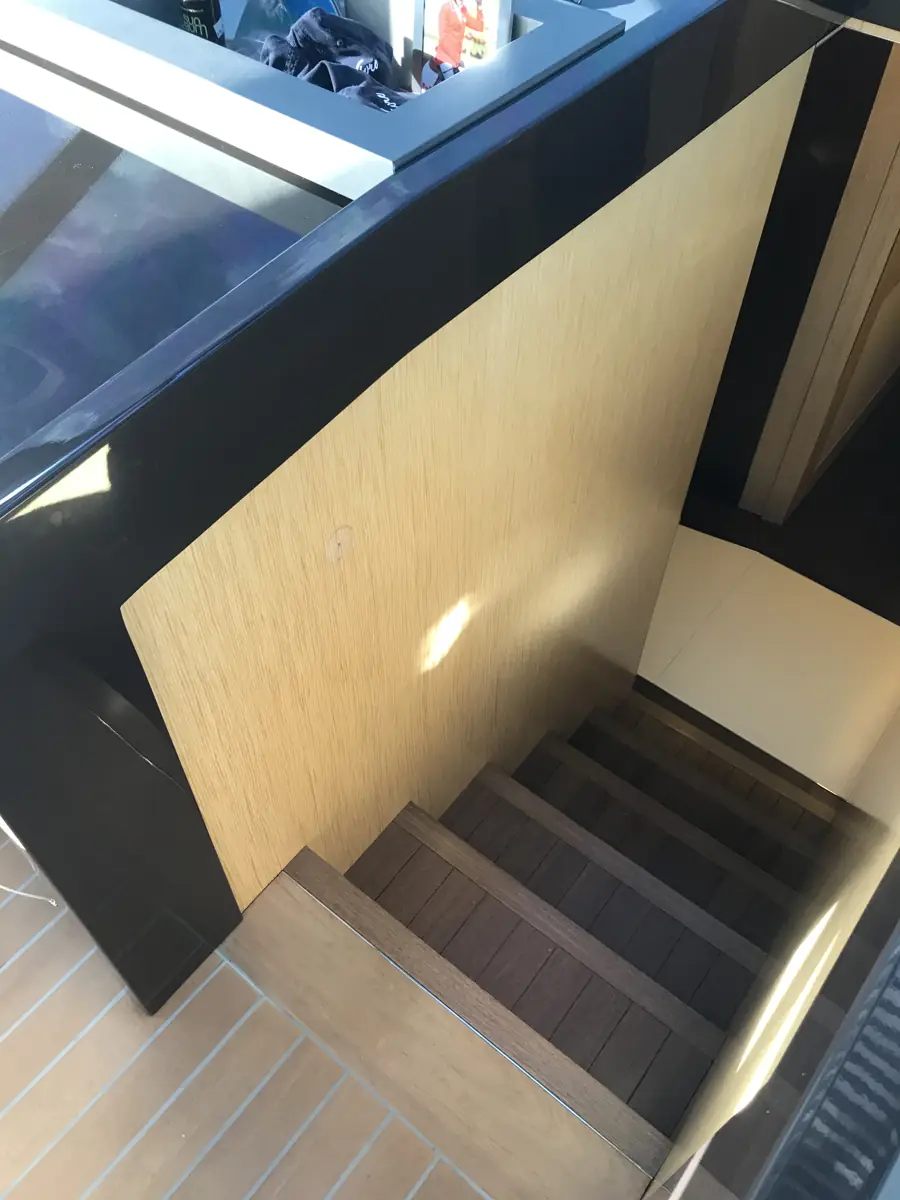
A real Vantage Surface installation. See more of our work →
Finishes
Over 460 finishes to choose from.
Woodgrains, stone and marble, metals, solids, textiles and specialty films — see any of them on a photo of your own space, or have physical samples mailed to you.
Resurface vs. Replace
Keep the structure. Change the finish.
Replacement removes what's already there and rebuilds it. Resurfacing works with the surface you have. Where the existing substrate is sound, that difference in scope is what keeps a space open while it changes.
Architectural Resurfacing
- Installed over the surface you already have
- Little to no demolition dust or debris
- Nights, weekends, or phased around your hours
- Built for occupied buildings
- No tear-out, disposal, or new substrate
Traditional Replacement
- Existing surface removed and rebuilt
- Dumpsters, dust, and debris
- Typically continuous daytime work
- Usually needs the space closed or emptied
- Demolition, disposal, and material lead times
Describes typical differences in scope, not guaranteed outcomes. Suitability depends on the condition of the existing surface — every project is assessed and quoted individually.
FAQ
Questions, answered.
Does the boat have to come out of the water?
No. Interior work is done in the slip. That's the main reason owners choose film over re-veneering.
How long does an interior take?
It depends on how much joinery there is and how cut-up it is. We survey aboard and give you a schedule you can fit into the rest of the refit.
Will it handle humidity and sun?
Interior film is designed for interior conditions and handles normal cabin humidity. Surfaces in constant direct UV — an exposed flybridge, for example — need a different conversation and sometimes a different product.
Can you match existing joinery we're keeping?
Yes, and it's worth doing a sample panel aboard before committing. We'll finish one real door or panel so the owner sees it in the boat's own light.
Also