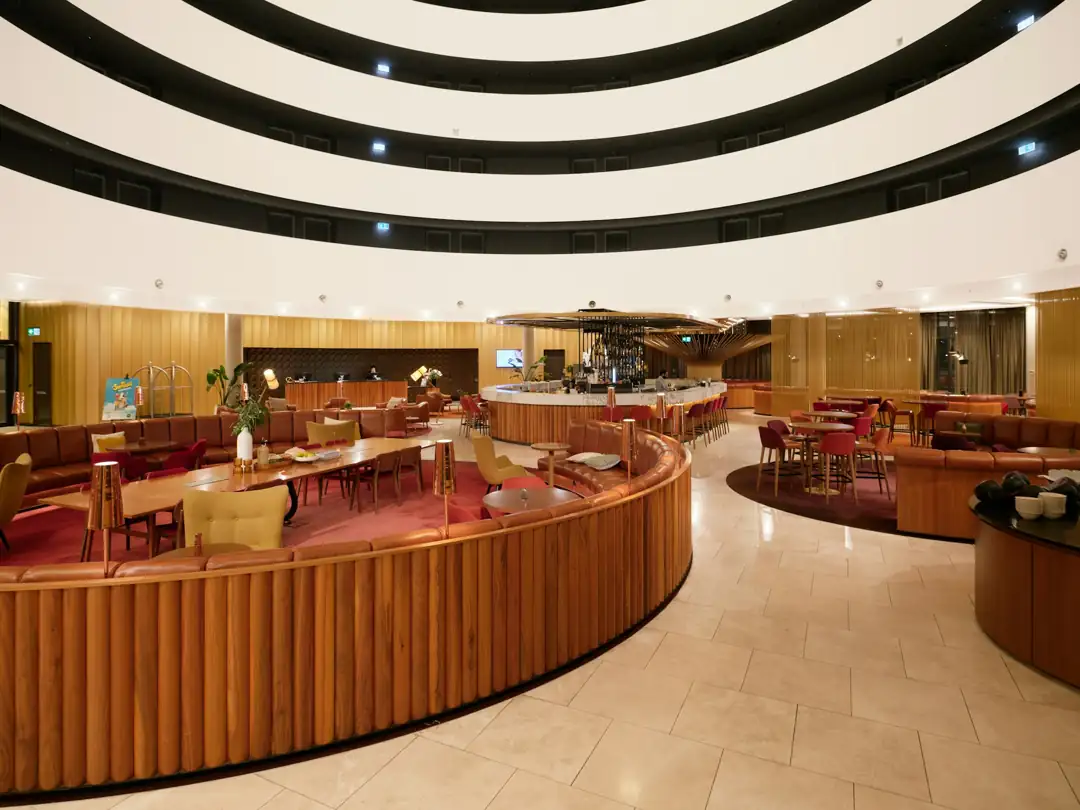
Cabinetry
Keep the boxes. Change the kitchen.
Doors, drawer fronts, end panels and boxes refinished in place — kitchens, baths, offices and institutional casework, without replacing a single cabinet.
What it is
Cabinet Refinishing & Wrapping
Cabinet boxes usually outlast their finish by decades. If the carcasses are square and the hardware works, what's actually dated is the surface. Film is applied to doors, drawer fronts and exposed boxes, so the layout, plumbing and appliances never move.
Send a photo and rough dimensions if you have them — we'll tell you what's possible.
Or text (561) 223-1826
Text us a photo of your cabinets
Send a photo and rough dimensions if you have them — we'll tell you what's possible.

Scan to text us from your phone
What we resurface
- Door and drawer fronts, both faces
- Cabinet boxes and exposed end panels
- Toe kicks, valances and light rails
- Islands and waterfall returns
- Laboratory and institutional casework
- Built-in wardrobes and closet systems
Why it works here
Nothing moves
Counters, sinks, appliances and plumbing stay where they are. Doors come off for prep and go back on the same hinges.
Finishes a factory would charge for
Rift oak, walnut, high-gloss solids, super-matte and metallics — looks that are expensive in a re-door quote and standard in the film library.
Works on laminate
Existing melamine and high-pressure laminate is an ideal substrate. That's the material most 1990s and 2000s casework is made of.
Our work
University lab casework
Laboratory casework in a science building at Florida Atlantic University, refinished in place while the building stayed in use.
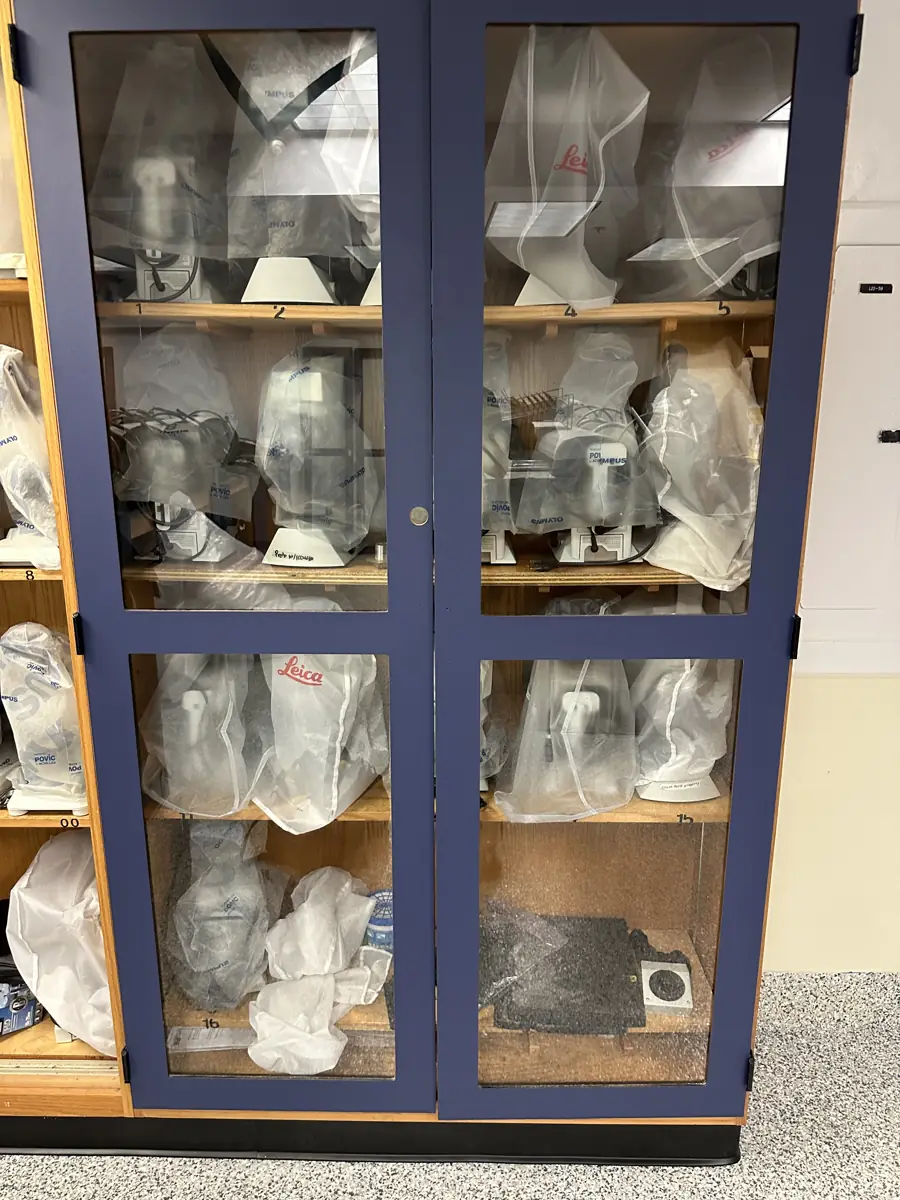
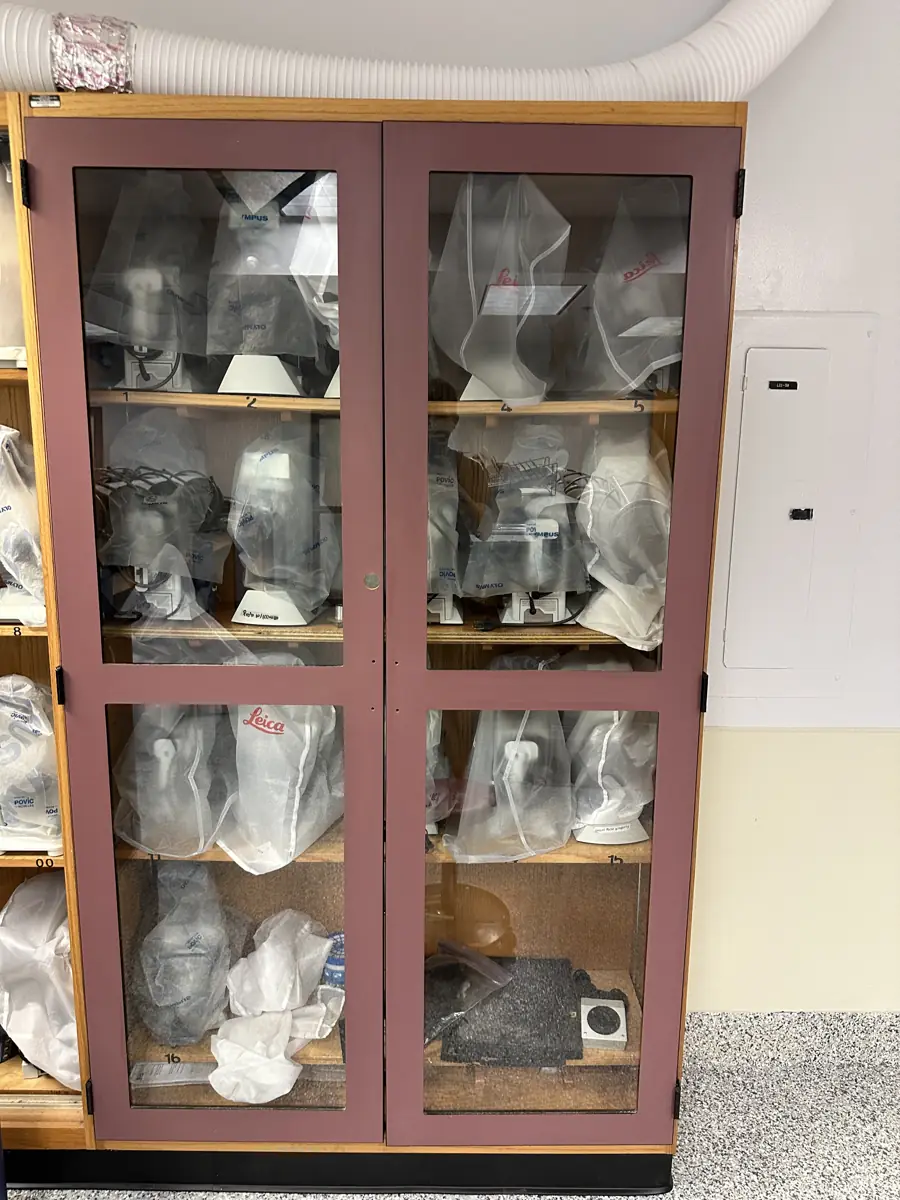
A real Vantage Surface installation. See more of our work →
Finishes
Over 460 finishes to choose from.
Woodgrains, stone and marble, metals, solids, textiles and specialty films — see any of them on a photo of your own space, or have physical samples mailed to you.
Resurface vs. Replace
Keep the structure. Change the finish.
Replacement removes what's already there and rebuilds it. Resurfacing works with the surface you have. Where the existing substrate is sound, that difference in scope is what keeps a space open while it changes.
Architectural Resurfacing
- Installed over the surface you already have
- Little to no demolition dust or debris
- Nights, weekends, or phased around your hours
- Built for occupied buildings
- No tear-out, disposal, or new substrate
Traditional Replacement
- Existing surface removed and rebuilt
- Dumpsters, dust, and debris
- Typically continuous daytime work
- Usually needs the space closed or emptied
- Demolition, disposal, and material lead times
Describes typical differences in scope, not guaranteed outcomes. Suitability depends on the condition of the existing surface — every project is assessed and quoted individually.
FAQ
Questions, answered.
How is this different from cabinet painting?
Paint is a coating applied wet on site, so it lives with brush marks, cure time and chip behaviour. Film is a factory-finished surface applied dry. No smell, no overspray, no drying time before the kitchen is usable.
Do the doors get taken off?
Yes — doors and drawer fronts come off for cleaning, prep and wrapping, then go back on the original hinges with the original hardware unless you're changing it.
What about the inside of the cabinets?
Interiors are normally left alone since they're not seen and not worn in the same way. If you want them done, they can be.
Can you match a finish I've already chosen?
Send the product name or a photo. We'll pull the closest options and send physical samples so you can compare in your own light.
Also