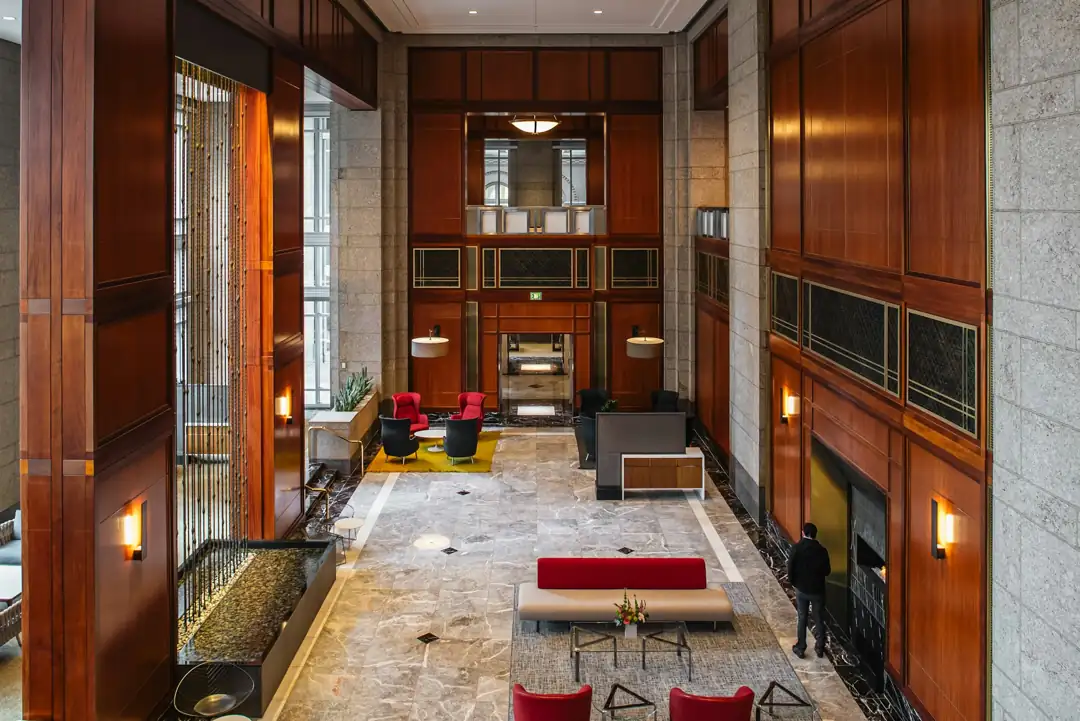
Walls & Panels
Feature walls without a demolition permit.
Lobby walls, corridor panels, columns, partitions and feature walls refinished in place — wood, stone, concrete and textile looks over the surface you already have.
What it is
Wall & Panel Resurfacing
Most commercial walls are perfectly sound and simply dated. Replacing the panelling means demolition, dust containment, disposal and lead times on new material. Film is applied to the existing substrate, so a lobby can change character over a weekend and be in use on Monday.
Send a photo and rough dimensions if you have them — we'll tell you what's possible.
Or text (561) 223-1826
Text us a photo of the wall
Send a photo and rough dimensions if you have them — we'll tell you what's possible.

Scan to text us from your phone
What we resurface
- Lobby and corridor wall panels
- Columns and column surrounds
- Restroom partitions and stall doors
- Accent and feature walls
- Bulkheads and ceiling soffits
- Dry-erase wall surfaces
Why it works here
The building stays open
No tear-out means no dumpster, no containment and no shutdown. Work is sectioned so occupants keep using the space.
Curves and columns included
Film conforms to round columns, radiused corners and shaped reveals that sheet goods can't follow without custom fabrication.
Stone looks without stone weight
Marble, travertine, concrete and terrazzo finishes with no structural load, no substrate change and no wet trades on site.
Our work
University restroom partitions
Restroom partitions in a science building at Florida Atlantic University, taken from red to navy while the building stayed open. Partitions plus the lab casework ran about five days.
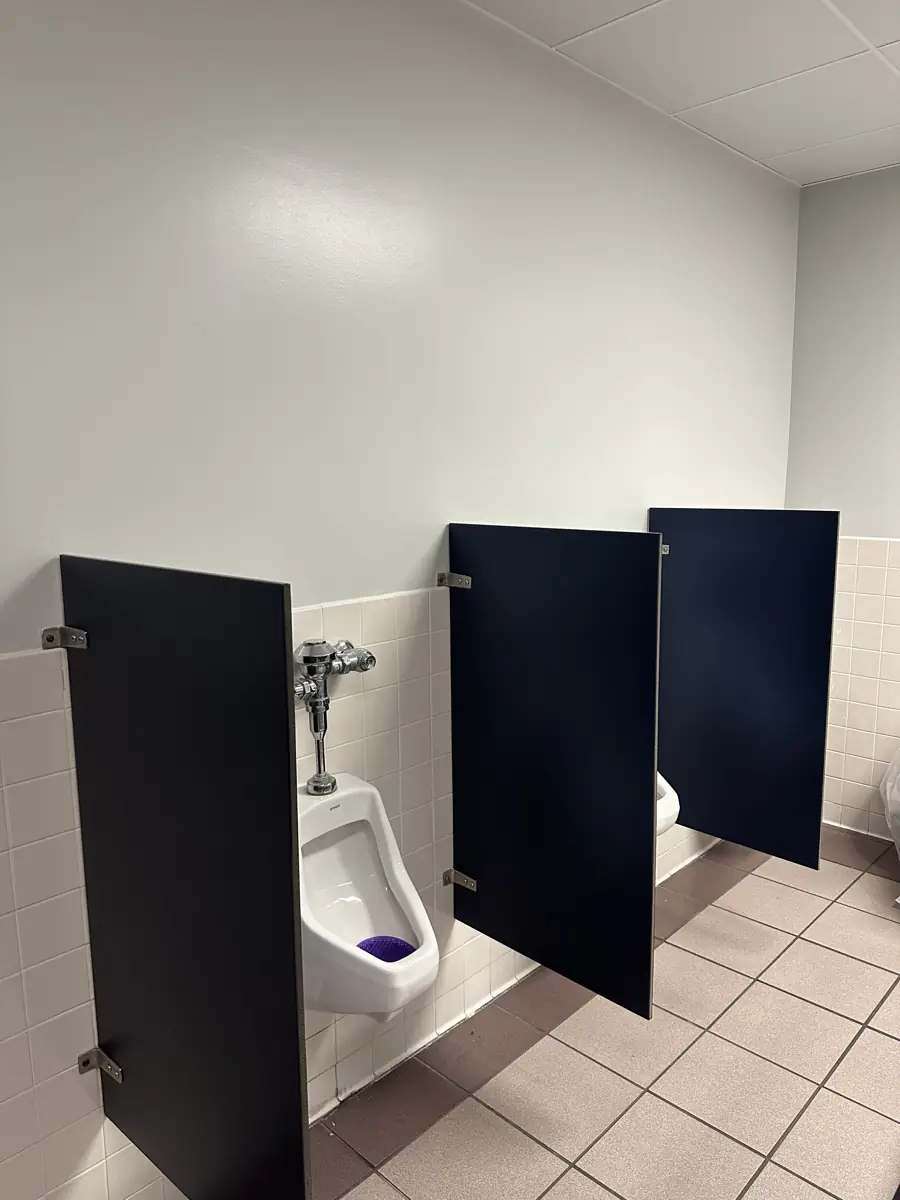
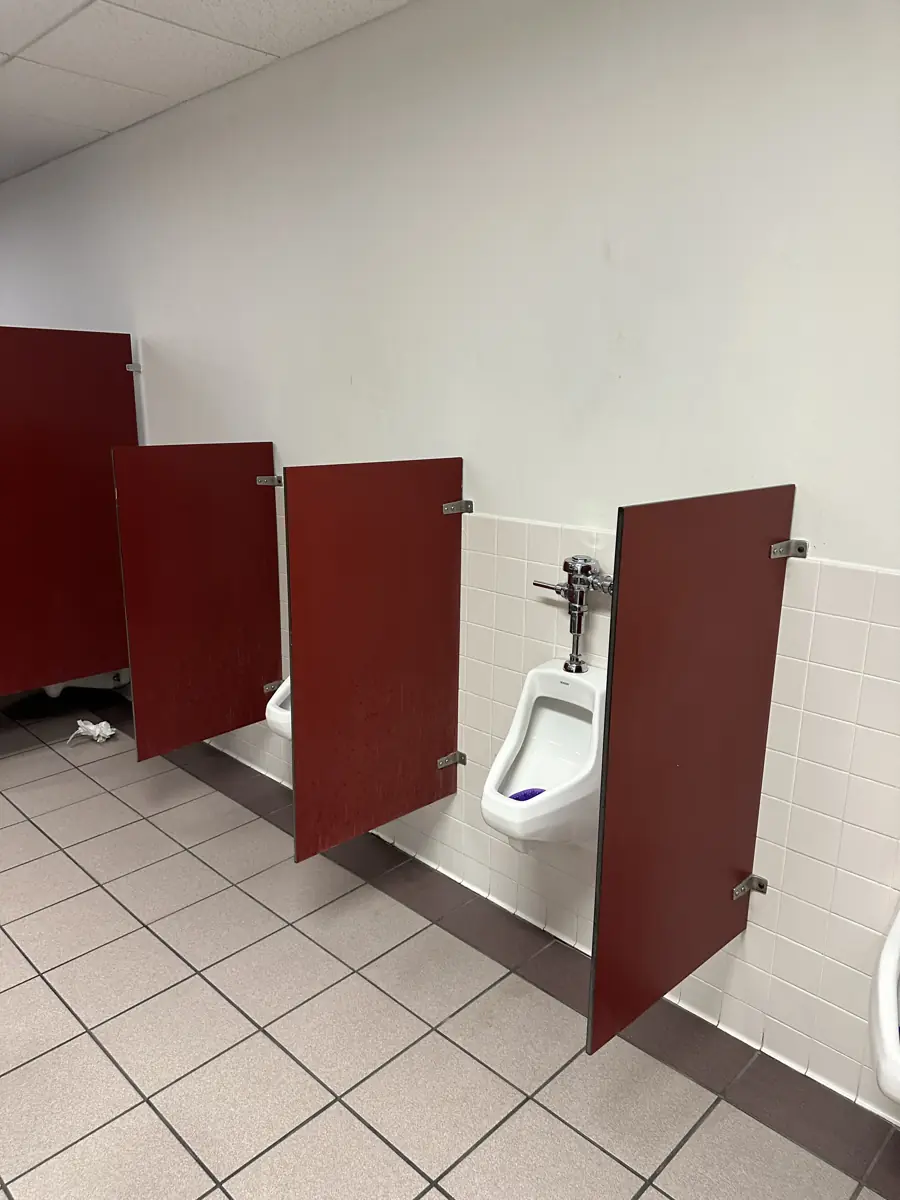
A real Vantage Surface installation. See more of our work →
Finishes
Over 460 finishes to choose from.
Woodgrains, stone and marble, metals, solids, textiles and specialty films — see any of them on a photo of your own space, or have physical samples mailed to you.
Resurface vs. Replace
Keep the structure. Change the finish.
Replacement removes what's already there and rebuilds it. Resurfacing works with the surface you have. Where the existing substrate is sound, that difference in scope is what keeps a space open while it changes.
Architectural Resurfacing
- Installed over the surface you already have
- Little to no demolition dust or debris
- Nights, weekends, or phased around your hours
- Built for occupied buildings
- No tear-out, disposal, or new substrate
Traditional Replacement
- Existing surface removed and rebuilt
- Dumpsters, dust, and debris
- Typically continuous daytime work
- Usually needs the space closed or emptied
- Demolition, disposal, and material lead times
Describes typical differences in scope, not guaranteed outcomes. Suitability depends on the condition of the existing surface — every project is assessed and quoted individually.
FAQ
Questions, answered.
What surfaces can take film?
Smooth, sound, non-porous surfaces — laminate, painted drywall in good condition, metal, glass, sealed wood, MDF. Heavily textured, crumbling or actively damp surfaces need repair or a skim coat first. Every project starts with an assessment of what's actually there.
Can you do a dry-erase wall?
Yes. There's a writable film that turns a wall into a whiteboard surface and takes the same finish treatment around it.
How long does a lobby take?
It depends on square footage and how cut-up the surfaces are, but a typical corridor or lobby is measured in days, not weeks. We'll give you a schedule with the quote.
Does it come off later?
Film is removable. On a sound substrate it comes off without taking the wall with it, which is part of why it works for leased space and hospitality refresh cycles.
Also