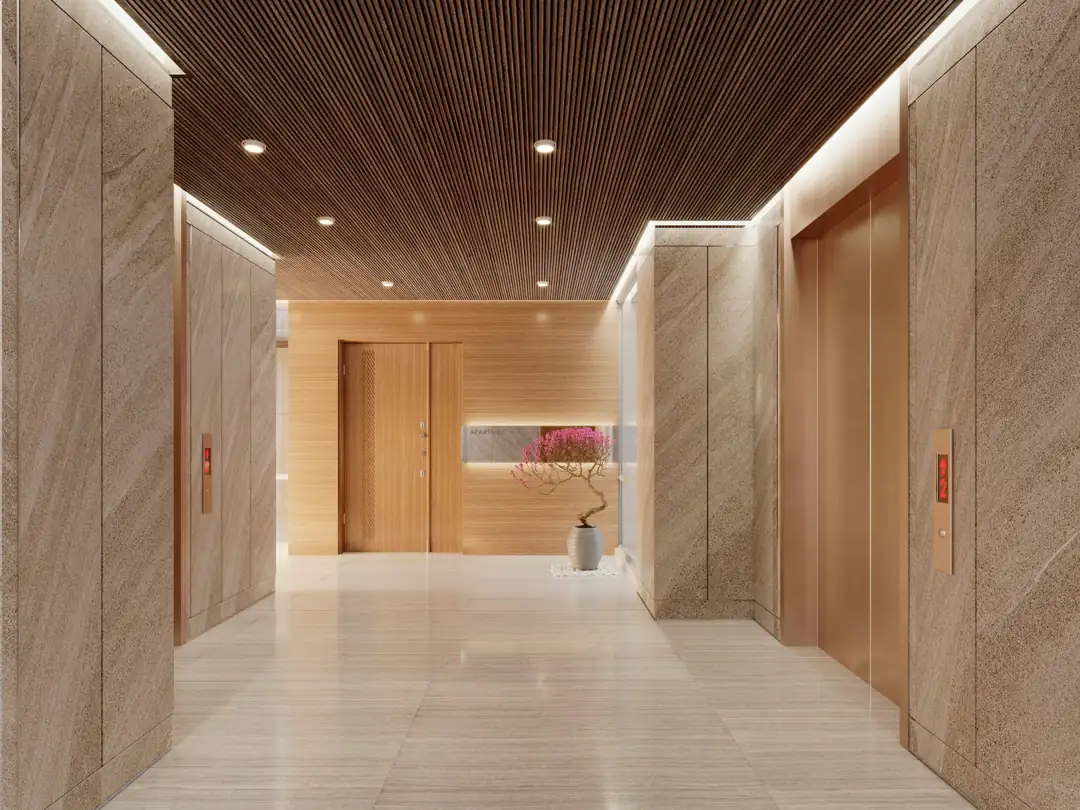
Elevators
Elevator cabs, refinished overnight.
Cab walls, ceilings, landing doors and frames refinished in place with architectural film — no cab removal, no crane, no week-long outage.
What it is
Elevator Interior Refinishing
An elevator cab is the most-seen surface in a building and the most expensive to replace. Stripping and re-panelling a cab means taking the car out of service for days and paying for custom metalwork. Film goes over the existing panels and doors, so the car is usually back in service the same night.
Send a photo and rough dimensions if you have them — we'll tell you what's possible.
Or text (561) 223-1826
Text us a photo of your elevator cab
Send a photo and rough dimensions if you have them — we'll tell you what's possible.

Scan to text us from your phone
What we resurface
- Cab side and rear wall panels
- Cab doors, both faces
- Landing doors and frames on every floor
- Return panels, kick plates and reveals
- Ceilings and soffits
Why it works here
Done outside business hours
Most cabs are wrapped after the building closes. One car at a time keeps the bank running while the work happens.
Fire-rated options
Film series with Class A surface-burning ratings and UL 10C fire-door listings are available where the assembly requires them — tell us the spec and we'll match it.
Matches the lobby, not the catalog
Wood, stone, brushed metal and solid finishes from the full library, so the cab can match millwork that's already in the building.
Finishes
Over 460 finishes to choose from.
Woodgrains, stone and marble, metals, solids, textiles and specialty films — see any of them on a photo of your own space, or have physical samples mailed to you.
Resurface vs. Replace
Keep the structure. Change the finish.
Replacement removes what's already there and rebuilds it. Resurfacing works with the surface you have. Where the existing substrate is sound, that difference in scope is what keeps a space open while it changes.
Architectural Resurfacing
- Installed over the surface you already have
- Little to no demolition dust or debris
- Nights, weekends, or phased around your hours
- Built for occupied buildings
- No tear-out, disposal, or new substrate
Traditional Replacement
- Existing surface removed and rebuilt
- Dumpsters, dust, and debris
- Typically continuous daytime work
- Usually needs the space closed or emptied
- Demolition, disposal, and material lead times
Describes typical differences in scope, not guaranteed outcomes. Suitability depends on the condition of the existing surface — every project is assessed and quoted individually.
FAQ
Questions, answered.
Does the elevator have to be shut down?
One car at a time, and usually only for the hours we're working in it. In a multi-car bank the others stay in service. Single-car buildings are typically scheduled overnight or on a weekend.
Can you wrap the doors as well as the cab?
Yes — cab doors, landing doors and frames on every floor. Doors are often the part that looks worst, because they take the most contact.
Will it hold up to daily use?
Architectural film is built for high-contact commercial surfaces. Where a cab takes freight or cart traffic, we'll usually recommend a heavier film or a protective kick panel at the bottom.
What about fire code?
Send us the requirement your AHJ or elevator contractor is working to. Several series carry Class A surface-burning classifications and UL 10C listings; we'll confirm the specific product's test data in writing before anything is ordered.
Also